

Cat Control on the Granite Belt
Cats have a significant and devastating impact on our native wildlife and as a region with bushland areas of high biodiversity values, uncontrolled cats are decimating wildlife and contributing to the rising feral cat problem.
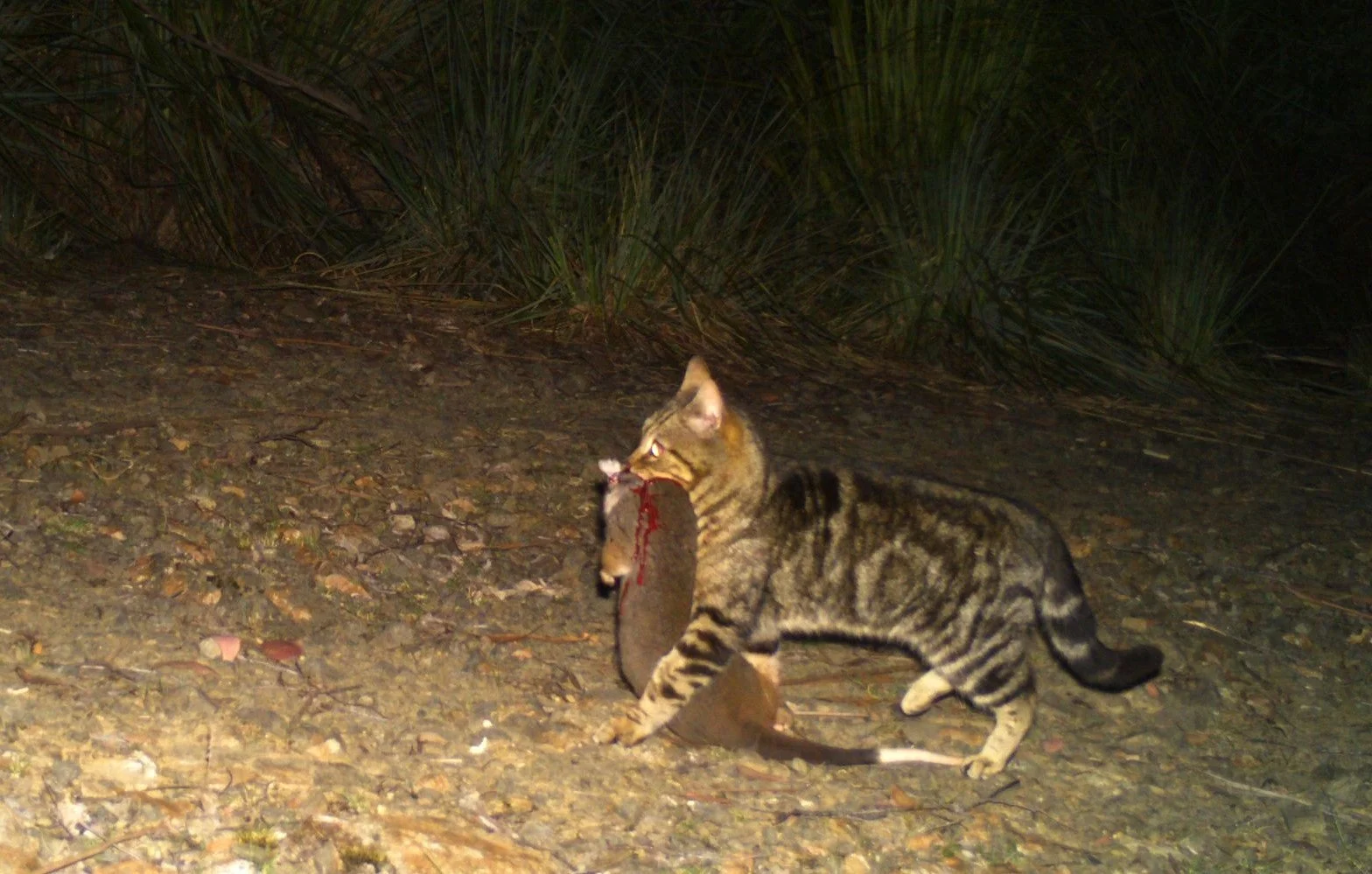
A feral cat with it’s kill
As part of GBSAN's efforts to reduce the impact of cats on the native wildlife in our region, we have, for years, been lobbying the Council to improve its control methods. Many other Councils throughout Australia have effective strategies such as compulsory registration, desexing and containment but our Council is lagging way behind in this.
A cat management strategy was adopted by the Council back in 2022 but just advocated educational programs and no effective control measures. Public consultation in the development of the strategy showed overwhelming support for compulsory registration and desexing programs and more effective control of feral cats. If you also feel strongly about the need for this, please contact your local councillors to try and get some action.
The Council does have a by-law requiring the containment of all domestic animals, including cats. This means they have the powers to deal not only with feral cats but also with roaming domestic ones. So if you have unwanted cats on your property, try negotiating with the owner to keep them contained. If this doesn't work, contact the Council on 1300 697 372 to report them as a nuisance. This also applies if you see feral cats around town or at hotspots like the Council refuse transfer stations. Council officers are fairly diligent in following up on such complaints and organising trapping programs. Obviously feral cats are humanely euthanised while efforts are made to contact the owners of domestic ones or get them re-homed.
GBSAN has cat traps available for loan to members. If you'd like to borrow one, please contact Liz Bourne on 4683 6374 or at batmaps.liz@gmail.com to arrange for collection. Delivering trapped cats to the pound helps show the Council the extent of the problem and may lead to better control measures.